
Every Building in a Neighborhood Tells a Story
Most realtors writing about Park Slope, one of Brooklyn’s most desirable neighborhoods, would focus on the townhouse market, inventory levels, or Romanesque Revival architecture. This month, I’m taking a different path.
Sometimes the best way to understand a neighborhood is through the story of a single building and the people who inhabited it.
I’ve lived in and around Park Slope since the 1990s, walking its tree-lined streets hundreds of times. In my early days here, one particular building stopped me in my tracks every time I passed.
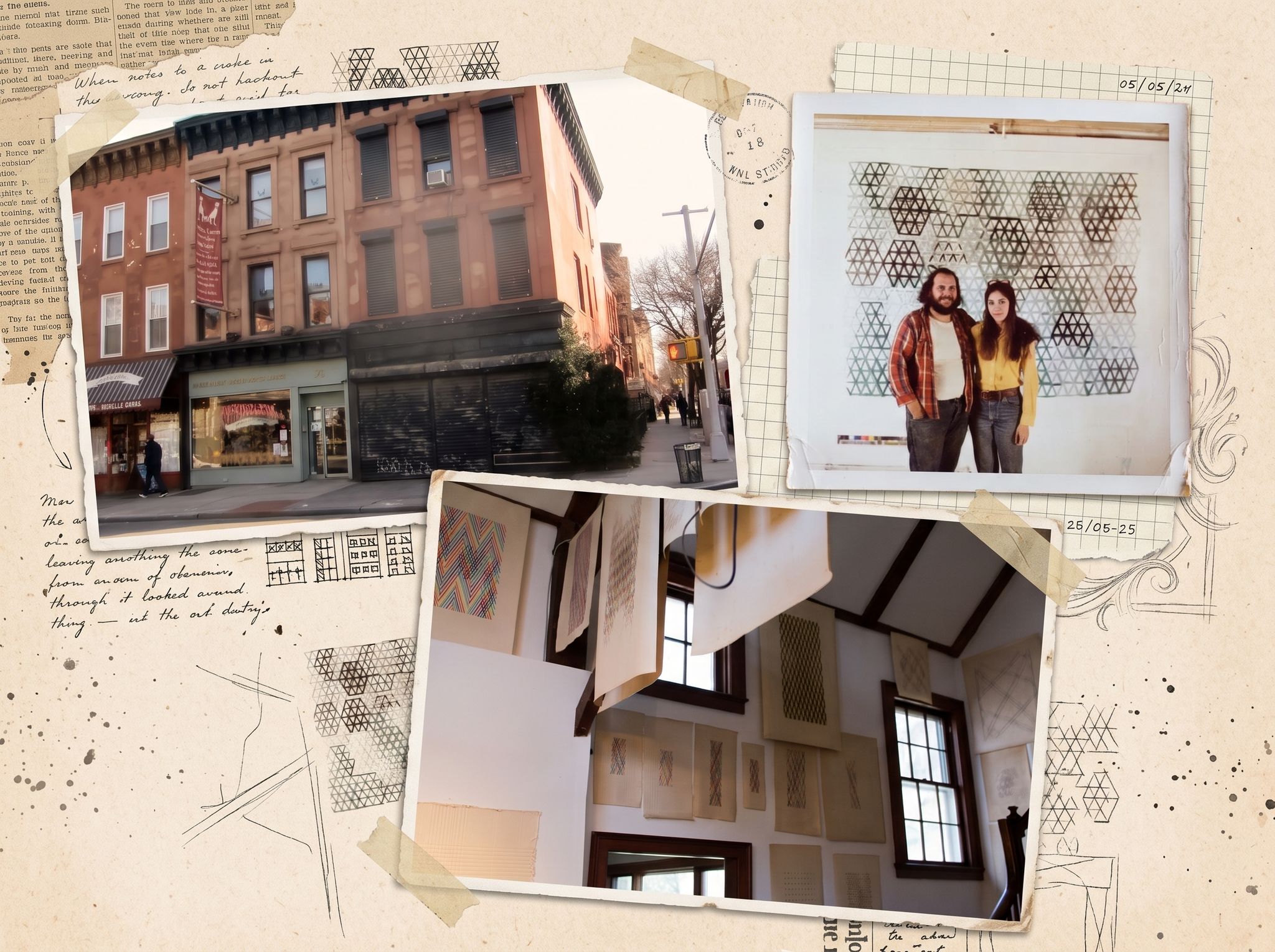
On the corner of 11th Street and 7th Avenue sat a classic brownstone with a ground-floor storefront and apartments above. Every single one of its tall windows was shuttered and obscured. This was Park Slope in the early 2000s—bustling with cafés, boutiques, and crowded sidewalks—yet this prime corner remained dark and shuttered, year after year.
Neighbors constantly wondered: Who lived there? What was happening behind closed shutters?
All anyone knew was that the owner had a reputation for being eccentric and elusive. He refused to rent the storefront to anyone, turning down every neighbor and hopeful business owner who asked. Lucrative purchase offers came and went; he rejected every single one.
The answer finally revealed itself after he passed away.
The building had belonged to Leo J. Bates, a reclusive artist known for his complex geometric paintings and drawings. In the late 1960s, Leo was an active figure in the SoHo art scene. But after a decade with little mainstream recognition, he stepped away in frustration. In 1978, he relocated his studio to Brooklyn, purchasing the corner building for just $45,000.
When Bates died in 2013 and the property changed hands, the new caretakers discovered an astonishing treasure trove. Behind those dark, boarded-up windows, Leo had never stopped creating. He had produced hundreds of intricate geometric works that almost no one had ever laid eyes on. The storefront wasn't empty; it was a private archive of one man’s life’s work. His estate sold the building in 2014 for $3 million. For a time, an Italian restaurant, Hugo & Sons, occupied the ground floor. Today, it’s home to Winner, a beloved neighborhood bakery where patrons line up down the block every morning for fresh sourdough and pastries.
I still walk past that corner regularly. Seeing the crowd outside, I can’t help but think of all those decades when hundreds of masterworks sat silently behind the glass. It’s a vivid reminder that in Park Slope, some of the most extraordinary stories hide in plain sight—just behind doors we pass every day.
If you’d like to discover more hidden histories across Park Slope, let’s spend a day exploring together. We’ll walk the neighborhood, and you never know what we might find.
Check out this article next