

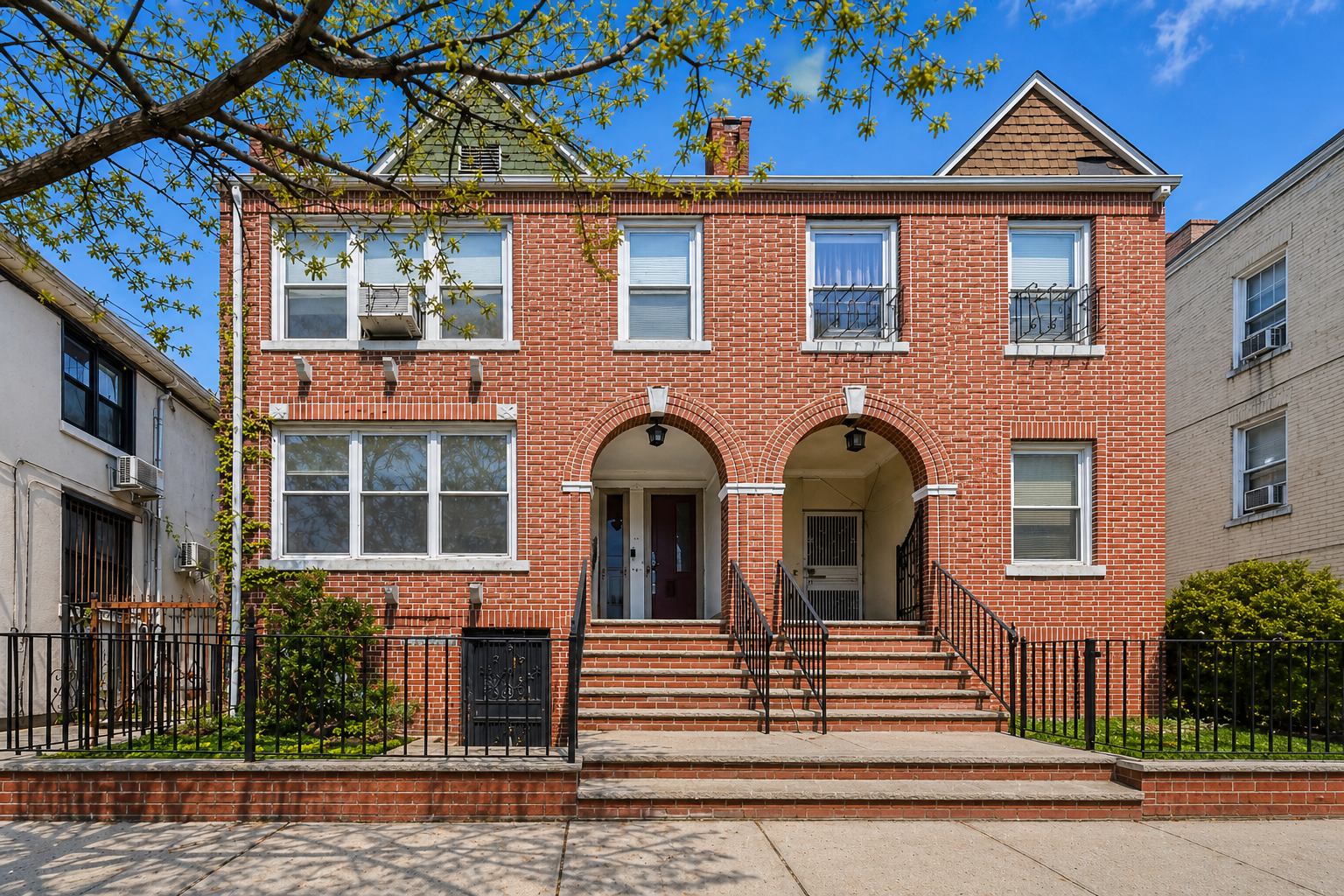
When I first walked up to 37 Chester Avenue, I thought this big townhouse was so majestic!
It's a brick two-family house with a small front yard, a couple of steps up from the sidewalk, and two entrances right next to each other, one leading into the first-floor apartment and the other taking you upstairs.
Inside, though, it was a different story.
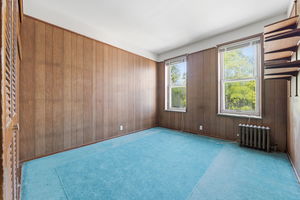
The house had been in the same family for decades, and by the time we first saw it, it was full. There was furniture, personal belongings, dated finishes and plenty of things that made it difficult to immediately see the house for what it could be. The upstairs, in particular, felt like a time capsule. Downstairs had seen more updates, while upstairs still had wood paneling, older fixtures, a collection of finishes that belonged to another era, and even an old school pencil sharpener on the wall of the pantry.
But underneath all of that was something I noticed pretty quickly:
There was a lot of house there.
The front rooms got great light. There were large windows and some unusual transom windows that gave the rooms character. Upstairs, there was a little room tucked away with a closet that I particularly liked. A skylight that just needed to be uncovered to bring in even more light. The basement was huge, had its own entrance, and offered additional usable space.
You had to look past what was there to see what could be there.
And that became an important part of selling the property.
First, we had to make it possible to see
Our sellers were three family members who had inherited a home that had been part of their family for decades. They were all homeowners in their own right, living their own lives in different places, and it had simply become time to let this house go.
My first piece of advice was pretty straightforward: we needed to clear it out.
They moved quickly. We connected them with a rubbish-removal company, got the house emptied and had it painted flat white. We weren't trying to disguise the condition of the property or pretend it didn't need work. It did.
The goal was different. We wanted buyers to be able to see the space. Once the personal belongings were gone and the walls were fresh, the proportions became easier to understand. The light was easier to appreciate. The possibilities became more apparent. That preparation ended up mattering.
We brought the property to market through Compass Private Exclusives first, which gave us an opportunity to get it in front of agents and buyers before going fully public. We had a lot of showings, including agents within our own office bringing clients through.
And the feedback started coming in.
People were asking questions. They were spending time in the rooms. They were thinking about what they could do with the house.
That feedback is valuable.
Real estate isn't just about putting a number on a property and waiting to see what happens. Sometimes the market starts talking to you long before you have a signed contract.
Then the market started talking
The first offer actually came through during the Private Exclusive period. That was encouraging. It told us that there was real interest in the property before we had even fully opened it up to the broader market.
We eventually went public and had a tremendous amount of activity. I remember one of our first open houses having around 30 people come through.
The property wasn't for everyone.
It needed work. Someone buying it would have to be comfortable taking on a project, and there were significant updates that could eventually be needed. But for the right buyer, it was also a large two-family house with a basement, a garage and plenty of room to create something of their own.
We ultimately received around seven offers.
That sounds like the hard part should have been over.
It wasn't.
A couple of deals didn't make it to the finish line. One buyer, after an inspection, came back looking to reduce the price by hundreds of thousands of dollars. That wasn't a number that made sense for my sellers, particularly given the level of interest we were seeing from other buyers.
So we went back to the market, continued communicating with our sellers and eventually went through a best-and-final process.
The lesson wasn't that every offer works out.
The lesson was that activity gives you information.
When you have people coming through the door, asking questions, making offers and responding to the property, you have a much better understanding of where you actually stand.
My job was to keep my sellers informed about that activity so they could make decisions with a clear picture of what was happening—not simply react to whichever offer happened to be in front of them at that moment.
The deal isn't done when you accept the offer
The buyer who ultimately purchased 37 Chester was someone I felt confident would get to the finish line, even during some moments when the transaction became a little uncertain.
He had questions. Sometimes he didn't necessarily know the right question to ask.
That's something I've come to appreciate more about this business: sometimes people don't need you to have all the answers immediately. They need you to help uncover what needs to be answered.
I represented the sellers, and my fiduciary responsibility remained with them. At the same time, once we were in contract, I wanted to do everything I could to facilitate the transaction and help the buyer complete the steps necessary to close.
That meant coordinating access for the inspection, appraisal and survey. It meant staying on top of deadlines. It meant communicating with the buyer and keeping my sellers informed about what was happening.
Toward the end, the buyer was still working through financing as an important deadline approached. He was also going to be traveling internationally, and we were navigating the timing of the Jewish holidays.
For a moment, there were plenty of reasons to get nervous.
But I wasn't particularly worried.
Not because there was nothing that could go wrong. There was.
I just believed there was still a path forward.
And there was.
Stay calm. Stay vigilant.
That's probably the biggest thing I took away from this deal.
Real estate transactions are full of moments where something can change.
An inspection can change the conversation. An appraisal can change the conversation. Financing can become complicated. A buyer can get nervous. A seller can get impatient. An attorney can need something at the last minute.
Your job isn't to pretend those things aren't happening.
Your job is to stay calm while remaining vigilant and steadfast.
For me, that means communicating clearly, laying out the options, asking questions and making sure my clients understand what is actually happening before they decide what to do next.
With 37 Chester, we had three sellers who trusted us to guide them through a process that involved a lot of moving parts. I took that responsibility seriously.
And ultimately, we got where we were trying to go.
The house that initially looked like it had a lot to overcome became a property that attracted serious attention. The family was able to move on from a home that had been part of their lives for decades, and a new owner got the opportunity to take that same house and make it his own.
Maybe that's one of the things I like most about advising in real estate.
You have to be able to see a property for what it is.
But you also have to be able to see what it could become.
And somewhere between those two things is where good representation lives.
Check out this article next

Leave a Reply